The Welding Gun That Helped Win WWII
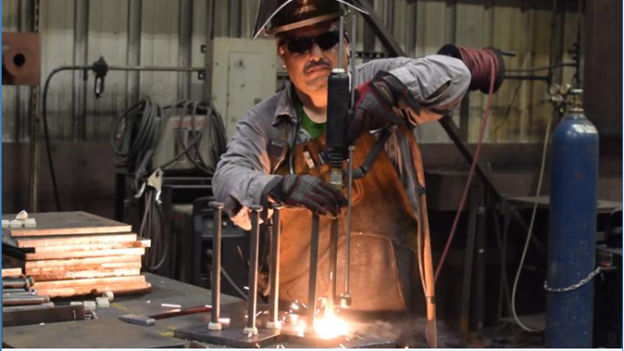
How a Rejected Welding Gun Changed an Industry and Helped Win a War
Stud welding is one of those industrial innovations that quietly supports modern construction, manufacturing, and infrastructure, from bridges and buildings to automotive frames and naval vessels. Fewer people realize that this same technology also played a meaningful role in helping the United States and its allies win World War II by dramatically accelerating ship production when speed mattered most.
The Wartime Production Challenge
In the early 1940s, the United States faced an urgent logistical challenge. The war effort depended on rapidly producing cargo ships, tankers, and naval vessels faster than enemy forces could sink them. Shipyards across the country were under immense pressure to increase output, yet many manufacturing processes were slow, labor-intensive, and poorly suited to high-volume production.
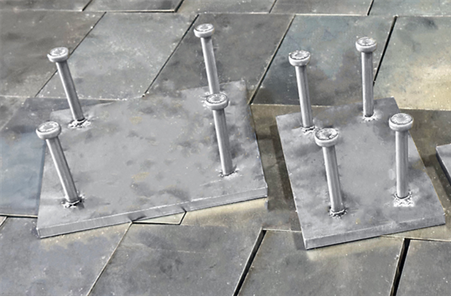
One major bottleneck involved attaching thousands of studs to ship hulls and internal structures. These studs were used to secure wiring, piping, insulation, and equipment. Traditional welding methods required flat surfaces, extensive scaffolding, and multiple steps, severely limiting production speed.
Innovation Born in a Garage
Enter Ted Nelson, a journeyman welder working at Mare Island Naval Shipyard. Fed up with the inefficiencies, Nelson began tinkering with his own solution. After supervisors rejected his early ideas, he took the project home and developed what would become the first effective stud welding gun: a spring-loaded welding gun with a ceramic flux cap that could be used on vertical or overhead surfaces. This innovation held the flux in place and dramatically reduced the time needed to weld a stud to a plate. When the trigger was pulled, the gun snapped the stud against the workpiece with just the right force and delivered a high-current weld in a fraction of the time.
This eliminated the need for scaffolding and pre welded pads and drastically reduced the labor required per stud. A single welder using Nelson’s system could install up to 1,000 studs per shift, compared to roughly 40 using conventional methods.
Speed That Changed the Outcome of the War
This leap in productivity had direct consequences for the war effort. Liberty ships and other wartime vessels required tens of thousands of studs each. By removing a major production bottleneck, Nelson’s stud welding system enabled shipyards to build vessels faster and with fewer workers.
At a time when Allied strategy depended on overwhelming industrial output, the ability to launch ships more quickly helped offset heavy losses to German U boats and ensured steady delivery of troops, vehicles, fuel, and supplies across the Atlantic and Pacific. While no single invention won the war, innovations like Nelson’s stud welding system multiplied the effectiveness of American shipyards and contributed to the broader industrial advantage that proved decisive.
Historians estimate that the technology saved millions of labor hours and played a role in the construction of thousands of wartime vessels, making it one of the most influential yet overlooked manufacturing advancements of World War II.
From Wartime Tool to Global Industry Standard
Following the war, Nelson formalized his invention into a business that would evolve into the Nelson Stud Welding brand. Today, Nelson operates under STANLEY Engineered Fastening, part of Stanley Black and Decker, expanding into construction, infrastructure, marine, automotive, and industrial manufacturing applications worldwide.
How Stud Welding Works Today
Modern stud welding is a direct descendant of Ted Nelson’s original invention, but it has advanced significantly in precision, reliability, and scalability. Nelson’s early system relied on mechanical spring force, manual controls, and relatively simple power delivery to create a fast, repeatable weld. Today’s stud welding equipment incorporates digitally controlled power supplies, microprocessor-based timing, and refined arc control, ensuring consistent weld quality regardless of operator experience or job conditions. Modern systems precisely regulate current, lift height, plunge force, and weld time, resulting in stronger, more uniform welds with less spatter and reduced post-weld cleanup.
Advancements in materials and automation have also expanded the scope and applications of stud welding. High-performance ceramic ferrules, improved shielding methods, and specialized alloys allow studs to be welded to a broader range of base metals and thicknesses. Automated and robotic stud welding systems now support high-volume manufacturing environments such as automotive assembly and large structural fabrication. At the same time, portable and battery-powered units enable field work that would have been impractical in Nelson’s era. Despite these advances, the core principle Nelson pioneered remains unchanged: a fast, one-sided, permanent fastening method that dramatically reduces labor while delivering consistent structural performance.
Sourcing Nelson Stud Welding Products from Steel Supply
For fabricators, contractors, and manufacturers looking to implement stud welding, Steel Supply offers access to Nelson stud welding equipment and consumables.
Through Steel Supply, customers can source:
• Nelson stud welding guns and power supplies
• Weld studs and fastening components
• Ceramic ferrules and accessories
• Technical guidance to help match equipment to project requirements
Steel Supply works with trusted manufacturers like Nelson to ensure customers receive reliable products, knowledgeable support, and efficient delivery. Whether the application is structural steel, marine fabrication, or industrial manufacturing, Steel Supply helps bring proven fastening technology to modern projects.
Shop our welding supplies today: https://www.steelsupplylp.com/...
Categories: Cool Stuff