Steel Plate: Strength, Rolling Methods, & Applications
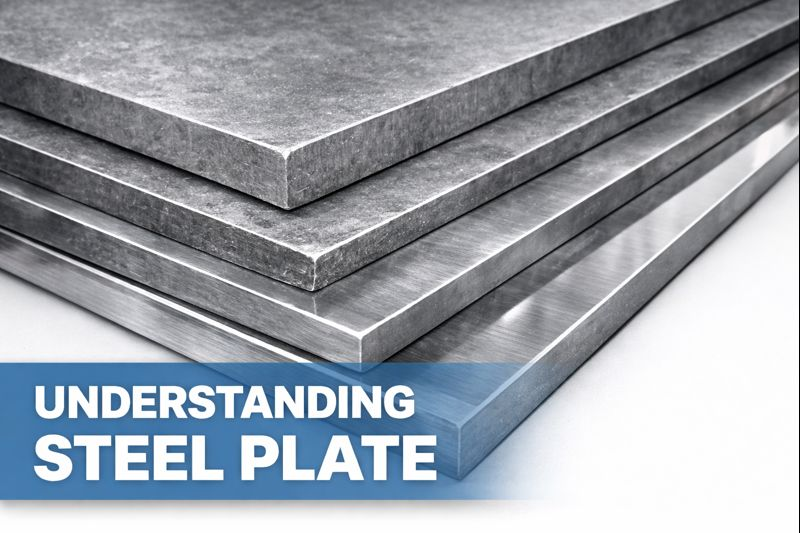
Steel plate is one of the most widely used and adaptable forms of steel in modern industry. From heavy construction and manufacturing to transportation and energy infrastructure, steel plate provides the strength, durability, and consistency required for demanding applications. Its flat profile, broad thickness range, and compatibility with multiple fabrication methods make it a foundational material across countless projects.
The Blog of Steel Series
This article is part of our Blog of Steel series, where we explore the fundamentals of steel, including common and popular shapes, sizing, applications, and the valuable attributes that make steel essential across countless industries.
Check out our previous articles on:
What Is Steel Plate?
Steel plate is a flat-rolled steel product produced in rectangular shapes and supplied in heavier thicknesses than sheet steel. Plate is engineered to handle higher loads, stresses, and wear, making it suitable for structural, industrial, and heavy fabrication applications. Plates are available in standard mill sizes or custom cut to specification, allowing flexibility for both large projects and precision fabrication.
Hot Rolled vs. Cold Rolled Steel Plate
Steel plate is most commonly produced through hot rolling, though cold rolling is used in certain applications where tighter tolerances and surface finish are required.
Hot Rolled Steel Plate
Hot rolled plate is produced by rolling steel at extremely high temperatures while it is above its recrystallization point. This process allows the steel to be formed into thicker sections with excellent structural integrity. Hot rolled plate typically has a scaled surface and slightly looser dimensional tolerances, but it offers superior strength, durability, and cost efficiency. For this reason, hot rolled plate is the standard choice for construction, heavy equipment, base plates, and structural components.
Cold Rolled Steel Plate
Cold rolled plate is processed further at or near room temperature after hot rolling. This additional rolling improves surface finish, dimensional accuracy, and flatness. While cold rolled plate is generally thinner and more expensive than hot rolled plate, it is preferred for applications where appearance, precision, or tight tolerances are critical. It is often used in manufacturing environments that require smooth surfaces and consistent dimensions.
Why Steel Plate Is So Strong
The strength of steel plate comes from its thickness, material composition, and rolling process. Compared to thinner flat products, plate resists bending, deformation, and impact under heavy loads. It also maintains excellent weldability and machinability when proper procedures are followed, allowing fabricators to cut, drill, form, and assemble components without sacrificing performance.
Common Types of Steel Plate
Steel plate is available in a range of grades and configurations to meet different performance requirements, including:
- Carbon steel plate for general structural and fabrication use
- Abrasion-resistant plate for high-wear environments
- Pressure vessel plate for boilers, tanks, and high-pressure applications
- Alloy steel plate for enhanced strength, toughness, or temperature resistance
How Steel Plate Is Cut
Steel plate is compatible with several cutting methods, each suited to different thicknesses, tolerances, and project requirements:
- Plasma cutting for fast, accurate cuts across a wide range of thicknesses
- Oxy-fuel cutting for very thick plate and heavy structural components
- Laser cutting for high precision and clean edges on thinner plate
Selecting the appropriate cutting method helps control edge quality, accuracy, and overall project efficiency.
Where Steel Plate Is Used
Steel plate plays a critical role across many industries, including construction, manufacturing, energy, transportation, and marine applications. Its flat geometry makes it ideal for base plates, gussets, structural supports, equipment housings, tanks, and large fabricated assemblies where strength and stability are essential.
Steel Plate at Steel Supply
Steel Supply carries steel plate from 3/16” to 6” thick, in widths from 4’ to 10’ and lengths from 8’ to 40’. In addition to carbon steel, we carry plate in stainless steel, aluminum, and galvanized. For detailed grade specifications and mechanical properties, you can reference Steel Supply’s Steel Reference Guide on steel plate, which provides comprehensive technical information used by engineers, fabricators, and buyers alike.
We also offer value-added services, including custom cutting and processing. Whether you need hot rolled plate for heavy structural work or cold rolled plate for precision fabrication, our team can help ensure you receive material that meets your exact specifications.
Categories: Steel Products