Yield Strength vs. Tensile Strength: What's the Difference?
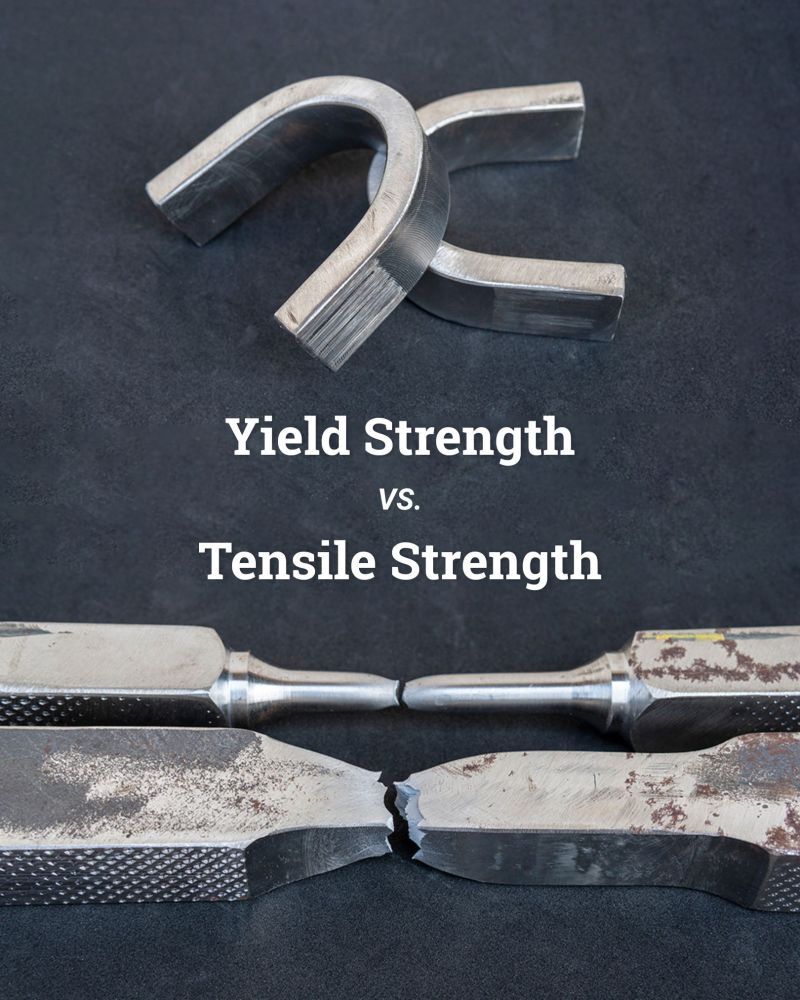
Two numbers tell you a lot about how steel will perform under load.
When people talk about the strength of steel, two terms come up again and again: yield strength and tensile strength.
While they sound similar, they describe two different points in steel's response to a load.
What Is Yield Strength?
Yield strength is the amount of stress steel can withstand before it begins to permanently deform.
Up to this point, steel behaves elastically. If the load is removed, the material returns to its original shape.Once the yield strength is exceeded, however, the steel begins to bend or stretch permanently. Even after the force is removed, it will not fully return to its original shape.
What Is Tensile Strength?
Tensile strength, also called ultimate tensile strength (UTS), is the maximum amount of stress steel can withstand before it fractures or breaks.
As force increases beyond the yield point, the steel deforms until it reaches its breaking point.
Yield Strength vs. Tensile Strength
A simple way to think about the difference is this:
- Yield strength is the point at which steel begins to bend permanently.
- Tensile strength is the point at which steel finally breaks.
In other words, steel typically yields before it fails.
Why Both Matter
Yield strength and tensile strength are both important when selecting steel for structural, industrial, and manufacturing applications.
Engineers and fabricators use these values to ensure a material can safely withstand the loads it will experience in service. Choosing steel with appropriate mechanical properties improves performance, reliability, and safety.
Helpful Links
Categories: Resources