Understanding Metal Building Components
Understanding Metal Building Components: R-Panels, C-Purlins, and Z-Purlins
Metal buildings have become one of the most popular construction solutions for commercial, industrial, agricultural, and residential applications. Their durability, cost-effectiveness, and ease of installation make them an excellent choice for warehouses, workshops, barns, equipment sheds, and retail facilities. At the heart of every successful metal building are key structural components that work together to create a strong and reliable system.
Among the most important components are R-panels, C-purlins, and Z-purlins. Understanding their functions can help builders, contractors, and property owners make informed decisions when planning a project.
What Are R-Panels?
R-panels are one of the most widely used metal panel profiles in the construction industry. These panels feature a durable ribbed design with high-strength steel construction, making them ideal for both roofing and wall applications.
Benefits of R-Panels
Exceptional Strength
The ribbed profile increases structural integrity, allowing R-panels to withstand harsh weather conditions, including heavy rain, wind, and hail.
Versatile Applications
R-panels can be installed on commercial buildings, agricultural structures, industrial facilities, garages, and residential projects.
Low Maintenance
Unlike traditional roofing materials, metal R-panels resist rot, insect damage, and deterioration, requiring minimal upkeep over their lifespan.
Long-Term Value
With proper installation, R-panel roofing and siding can last for decades while maintaining their appearance and performance.
Common Uses
- Metal roofing systems
- Exterior wall panels
- Warehouses
- Agricultural buildings
- Storage facilities
- Workshops and garages
Understanding C-Purlins
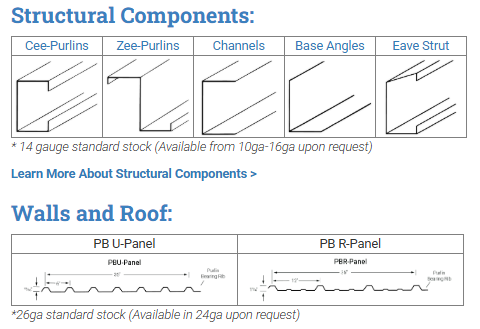
C-purlins are horizontal structural members shaped like the letter "C." They are commonly used in metal building framing systems to support roof and wall panels.
These components transfer loads from the roof sheeting to the main building frame, helping distribute weight efficiently throughout the structure.
Advantages of C-Purlins
Easy Installation
Their symmetrical shape makes them straightforward to install and connect to structural framing.
Cost-Effective
C-purlins provide excellent load-bearing capacity while using less material than many traditional framing options.
Versatility
They can be used for roof supports, wall girts, and secondary framing applications.
Typical Applications
- Small to medium-sized metal buildings
- Roof support systems
- Wall framing
- Canopies
- Carports
Because of their shape, C-purlins are often used at the edges of buildings where a flush connection is required.
What Are Z-Purlins?
Z-purlins are another essential structural component in metal building construction. As the name suggests, these members are shaped like the letter "Z."
Their unique profile allows adjacent sections to overlap, creating stronger connections and improved load distribution compared to many other framing members.
Benefits of Z-Purlins
Greater Structural Efficiency
The overlapping capability helps create continuous spans that increase overall building strength.
Longer Span Capability
Z-purlins can often span greater distances than comparable C-purlins, reducing the number of supports required.
Material Savings
Their design can lower overall steel usage while maintaining structural performance.
Improved Load Distribution
The overlapping sections help transfer loads more evenly throughout the building frame.
Common Applications
- Large commercial buildings
- Industrial facilities
- Warehouses
- Manufacturing plants
- Agricultural structures
Z-purlins are especially popular in larger buildings where longer spans and greater load capacities are required.
C-Purlins vs. Z-Purlins: What's the Difference?
While both products serve similar purposes, their designs affect how they perform within a structure.
| Feature | C-Purlins | Z-Purlins |
|---|---|---|
| Shape | C-shaped profile | Z-shaped profile |
| Installation | Simple, non-overlapping | Can overlap at connections |
| Span Capability | Moderate | Longer spans |
| Structural Efficiency | Good | Excellent |
| Typical Use | Smaller structures, edge framing | Large buildings, continuous spans |
In many projects, both C-purlins and Z-purlins are used together to maximize efficiency and performance.
Building a Stronger Structure
The success of any metal building depends on selecting the right components for the job. R-panels provide durable weather protection and an attractive exterior finish, while C-purlins and Z-purlins create the structural framework that supports the entire building system.
Whether you're constructing a warehouse, agricultural building, workshop, or commercial facility, choosing high-quality metal building components ensures long-term performance, durability, and value.
By understanding how R-panels, C-purlins, and Z-purlins work together, builders can create stronger, more efficient structures designed to stand the test of time.
Helpful Links
Categories: Steel Products