Aluminum & Steel - Comparing their Properties
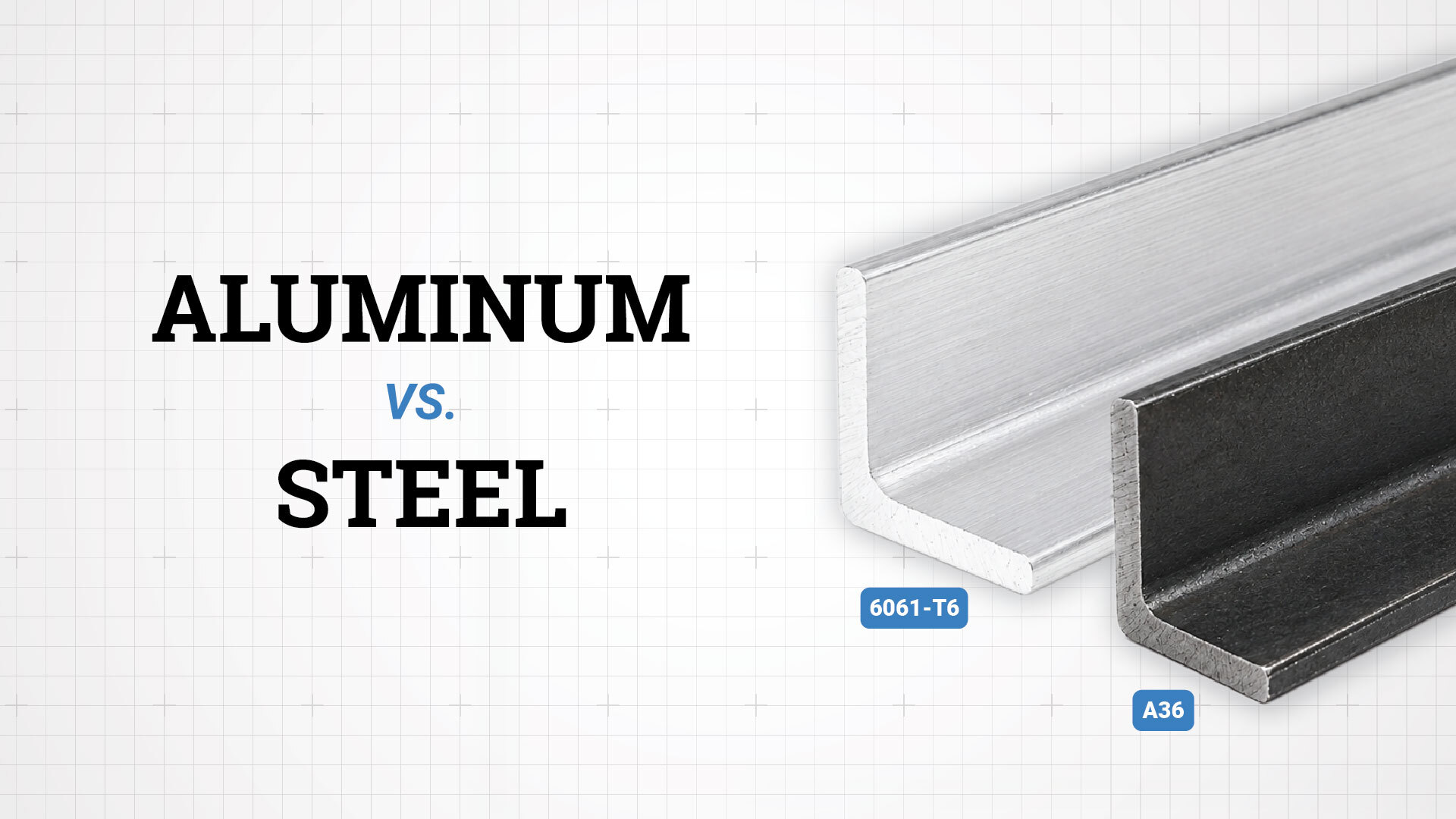
Steel or aluminum? The right choice depends on what matters most for your project.
Steel and Aluminum are both widely used for structural applications, but they behave very differently. To see how, let’s compare A36 carbon steel with 6061-T6 Aluminum.
The Weight Difference
One of the biggest advantages of Aluminum is its weight.
Consider a 20-foot angle with 2-inch legs and a 1/4-inch thickness:
- A36 steel: 3.19 lb. per foot
- 6061-T6 aluminum: 1.11 lb. per foot
At the same size, the aluminum angle weighs only about 35% as much as the steel angle. Over 20 feet, that’s about 64 pounds of steel compared to just 22 pounds of Aluminum.
That difference can make aluminum much easier to transport, handle, and install.
How Do They Compare in Strength?
Here’s a quick look at some of their mechanical properties:
| Steel | Aluminum | |
| Yield Strength | 36 ksi | 40 ksi |
| Tensile Strength | 58–80 ksi | 45 ksi |
| Modulus of Elasticity | 29,000 ksi | 10,000 ksi |
One thing that may stand out is yield strength. Aluminum has a slightly higher minimum yield strength than Steel.
Yield strength indicates how much stress a material can withstand before it begins to permanently deform. Based on these typical minimum values, Aluminum compares surprisingly well with Steel.
Steel Can Handle More Before Breaking
Yield strength isn't the whole story.
Steel has a higher tensile strength, which is the maximum stress a material can withstand before it fractures.
A36 steel typically has a tensile strength of 58–80 ksi, compared with about 45 ksi for 6061-T6 aluminum.
This gives steel an advantage when greater load capacity is needed.
Steel Is Much Stiffer
This is where the difference becomes especially noticeable.
Steel has a modulus of elasticity of about 29,000 ksi, compared with about 10,000 ksi for aluminum.
Simply put, steel is nearly three times stiffer than aluminum.
An aluminum piece will flex more than a similarly sized steel piece under the same load. Because of this, aluminum structures may use larger or differently designed sections when additional stiffness is needed.
So, Which One Should You Choose?
It depends on what the project requires.
Aluminum is a good option when reducing weight is important. It also offers good corrosion resistance, making it useful for transportation equipment, trailers, marine applications, architectural projects, and other applications where weight matters.
Steel is often preferred when stiffness, higher tensile strength, and cost are bigger considerations. It's commonly used for buildings, equipment frames, machinery, and a wide range of structural applications.
Helpful Links
Categories: Resources