Why Pipe Size Stays the Same (Even When the Wall Gets Thicker)
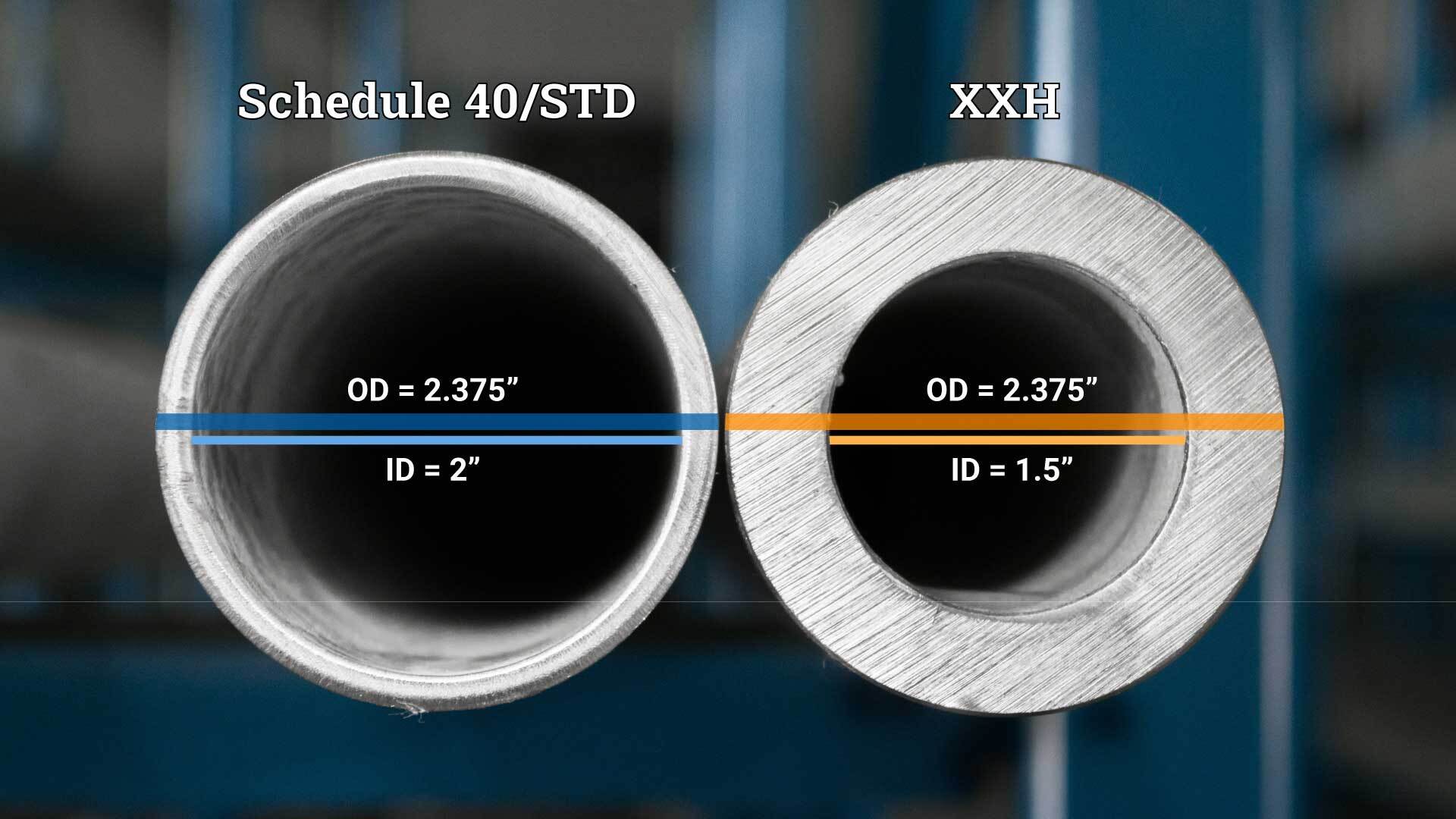
The outside size stays the same. The wall thickness is what changes.
Pipe sizes and schedules can seem confusing at first, but there's one simple rule that makes them much easier to understand.
No matter which pipe schedule you choose, steel pipe with the same Nominal Pipe Size (NPS) always has the same outside diameter. Whether it's Schedule 10, Schedule 40, Schedule 80, or an even heavier schedule, the outside dimensions stay the same.
What Actually Changes?
The difference between pipe schedules is the wall thickness.
As the wall thickens, the inside diameter decreases. The thicker wall allows the pipe to handle higher internal pressures while maintaining the same outside diameter.Because the outside size doesn't change, the same flanges, fittings, valves, and many threaded or welded connections can be used across different schedules of the same nominal pipe size.
A Simple Example
Take a 2-inch nominal steel pipe.
A 2-inch Schedule 40 pipe and a 2-inch Schedule 80 pipe have the exact same outside diameter. The Schedule 80 pipe simply has thicker walls, which reduces the inside diameter and increases its pressure-handling capability.
The Same Idea Applies to Steel Tubing
This sizing principle isn't limited to pipe.A piece of 2" × 2" square tubing measures 2 inches on the outside, whether it has a 1/8", 3/16", or 1/4" wall thickness. As the wall gets thicker, the inside opening becomes smaller while the outside dimensions remain the same.
Helpful Links
Categories: Resources