We will be closed on 9/7/2026 in observance of Labor Day.
Trustpilot

Preventing Rust

September 08, 2026

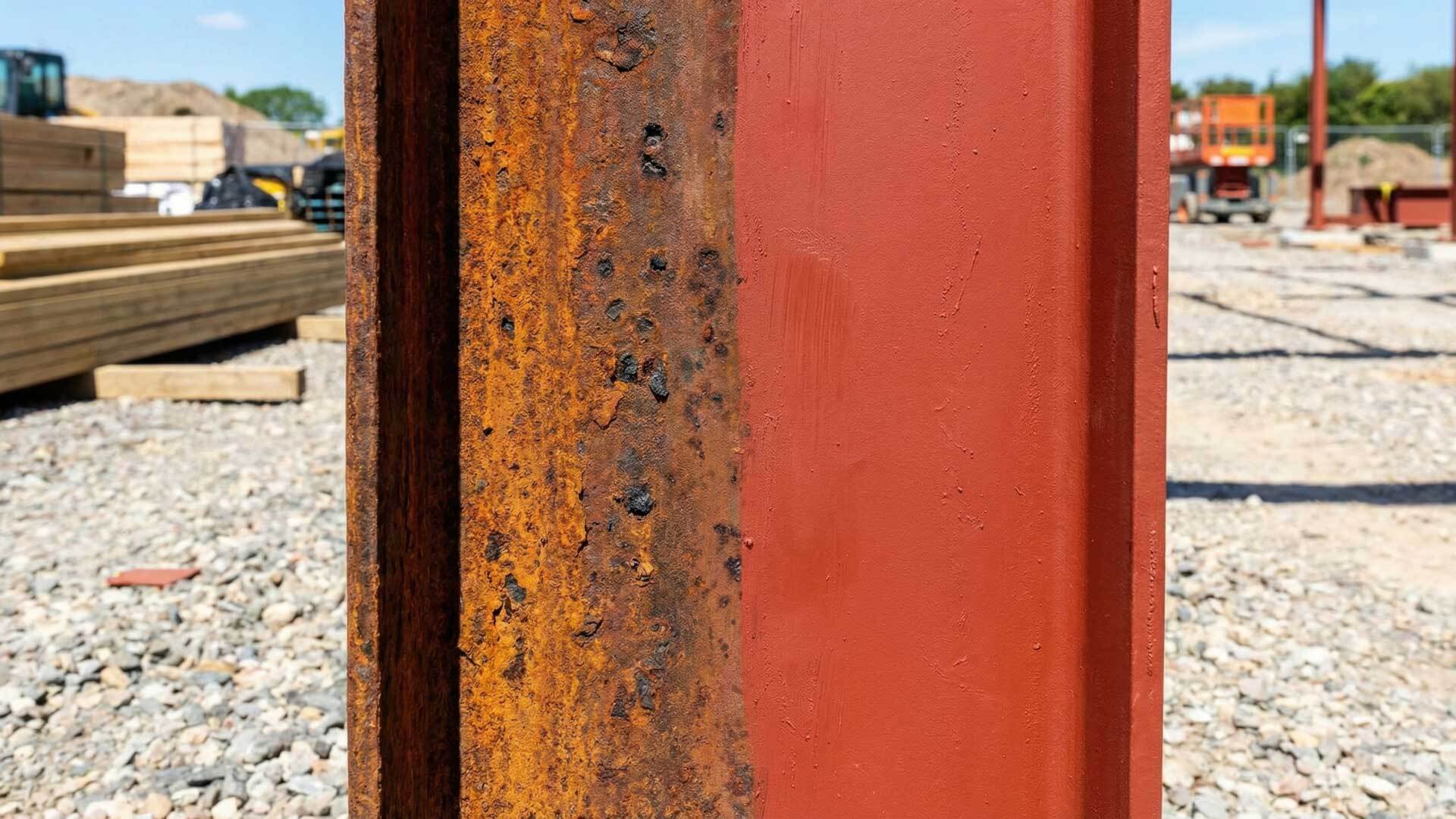
Painted steel

Preventing Steel from Rusting Outdoors

Steel is strong, durable, and economical, but when ordinary carbon steel is exposed to the outdoors, it has one major enemy: rust.

Rust occurs when iron in steel reacts with oxygen and moisture. Rain and humidity are obvious contributors, but even steel that never gets directly rained on can rust from condensation and moisture in the air. In coastal or industrial environments, salt and other contaminants can accelerate corrosion even further.

Fortunately, there are several proven ways to protect steel used outdoors.

Paint: The Most Common Line of Defense

One of the simplest and most economical ways to prevent rust is to keep moisture and oxygen from reaching the steel. A properly applied coating system creates a barrier between the steel and the environment.

Good surface preparation is critical. Dirt, oil, mill scale, and existing rust can prevent coatings from bonding properly. Depending on the application, steel may be cleaned mechanically, power-tool cleaned, or abrasive blasted before coating.

A typical outdoor system may include a corrosion-resistant primer followed by one or more finish coats. The primer helps protect the steel and promotes adhesion, while the topcoat provides additional protection from moisture, sunlight, and physical wear.

Even the best paint system eventually requires maintenance. Scratches, chips, and worn areas should be repaired before corrosion has an opportunity to spread.

Galvanizing: Protecting Steel with Zinc

Hot-dip galvanizing is one of the most effective methods of protecting carbon steel outdoors.

During the galvanizing process, fabricated steel is immersed in molten zinc. The zinc forms a metallurgically bonded coating over the steel, creating both a physical barrier and an additional form of protection known as sacrificial protection.

Zinc is more reactive than the underlying steel. If a galvanized surface is scratched and a small area of steel becomes exposed, the surrounding zinc can corrode preferentially, helping protect the exposed steel.

This is an important difference between galvanizing and ordinary paint. A scratch through a paint coating can expose bare steel directly to the environment, while zinc coatings can continue to provide some protection around small damaged areas.

Galvanized steel is commonly used for outdoor railings, structural components, fencing, sign structures, utility applications, trailers, and many other products exposed to weather.

Powder Coating

Powder coating provides another durable finish for steel. Instead of applying conventional liquid paint, a dry powder is electrostatically applied to the prepared steel and then cured with heat.

The result is a tough, attractive coating that can resist weathering, scratching, and chipping. For outdoor use, however, the coating system and surface preparation need to be appropriate for the environment.

Powder coating can also be combined with galvanizing. This combination is sometimes called a duplex coating system, with the zinc providing corrosion protection underneath and the powder coating providing an additional barrier and decorative finish.

Use Weathering Steel

Some applications use weathering steel, commonly associated with the trade name COR-TEN.

Unlike ordinary carbon steel, weathering steel is designed to develop a stable oxide layer under appropriate exposure conditions. That surface layer can slow further corrosion, giving the material its distinctive reddish-brown appearance.

That doesn't mean weathering steel never rusts—it intentionally develops an oxide layer. Its performance also depends heavily on the environment and the ability of the steel to go through wet-and-dry cycles. It isn't the right material for every outdoor application.

Choose Stainless Steel

For applications requiring significantly greater corrosion resistance, stainless steel may be a better choice.

Stainless steel contains enough chromium to form an extremely thin, protective chromium-rich oxide layer on its surface. If that layer is damaged, it can reform when sufficient oxygen is present.

Two common grades are 304 and 316 stainless steel. Type 304 provides excellent corrosion resistance for many outdoor applications, while 316 contains molybdenum and generally provides better resistance in environments involving chlorides, such as coastal locations.

Stainless steel costs considerably more than ordinary carbon steel, but its long service life and reduced maintenance can make it economical for certain applications.

Design Matters Too

Corrosion protection isn't only about choosing the right coating or material. Good design can make a major difference.

Outdoor steel structures should be designed so water can drain rather than collect. Horizontal surfaces, pockets, overlapping joints, and enclosed areas can trap moisture and debris. Small crevices may remain wet long after the rest of the structure has dried.

Drain holes, proper slopes, sealed joints where appropriate, and access for inspection and maintenance can all help extend the life of outdoor steel.

Contact between dissimilar metals should also be considered. Under certain conditions, combining different metals in the presence of an electrolyte such as water can create galvanic corrosion.

Don't Forget Cut Ends, Holes, and Welds

Corrosion often begins where protective coatings have been damaged during fabrication or installation.

Cutting, drilling, grinding, and welding can remove an existing protective coating and expose bare steel. Those areas should receive appropriate touch-up protection. This is particularly important when working with pre-galvanized or pre-painted material.

The same applies during installation. A beautifully coated steel component can quickly begin rusting if its finish is deeply scratched while being transported, handled, or assembled.

Keep Steel Dry During Storage

Even before steel becomes part of a finished project, proper storage can reduce corrosion.

Steel stored outside should be elevated from the ground and arranged so water can drain away. Avoid situations where rainwater becomes trapped between tightly stacked pieces. Surprisingly, covering steel improperly can sometimes make the problem worse by trapping condensation underneath a tarp.

Air circulation and drainage are important.

There Is No Single Best Solution

The right rust-prevention method depends on the application, environment, expected service life, appearance, and budget.

For many projects, properly prepared and painted carbon steel offers an economical solution. For long-term outdoor exposure with less maintenance, galvanized steel may be preferable. Stainless steel can provide much greater corrosion resistance when conditions demand it, while weathering steel can be an option for certain structural and architectural applications.

Whichever method is chosen, the basic principle remains the same: control the steel's exposure to moisture and corrosive elements, and address damaged protection before corrosion has a chance to spread.

At Steel Supply, L.P., we stock a wide variety of steel products for indoor and outdoor applications, including carbon steel, galvanized steel, and stainless steel. If you're unsure which material makes the most sense for your next project, give our knowledgeable sales team a call at 713-991-7600.