How Much Does Steel Weigh?
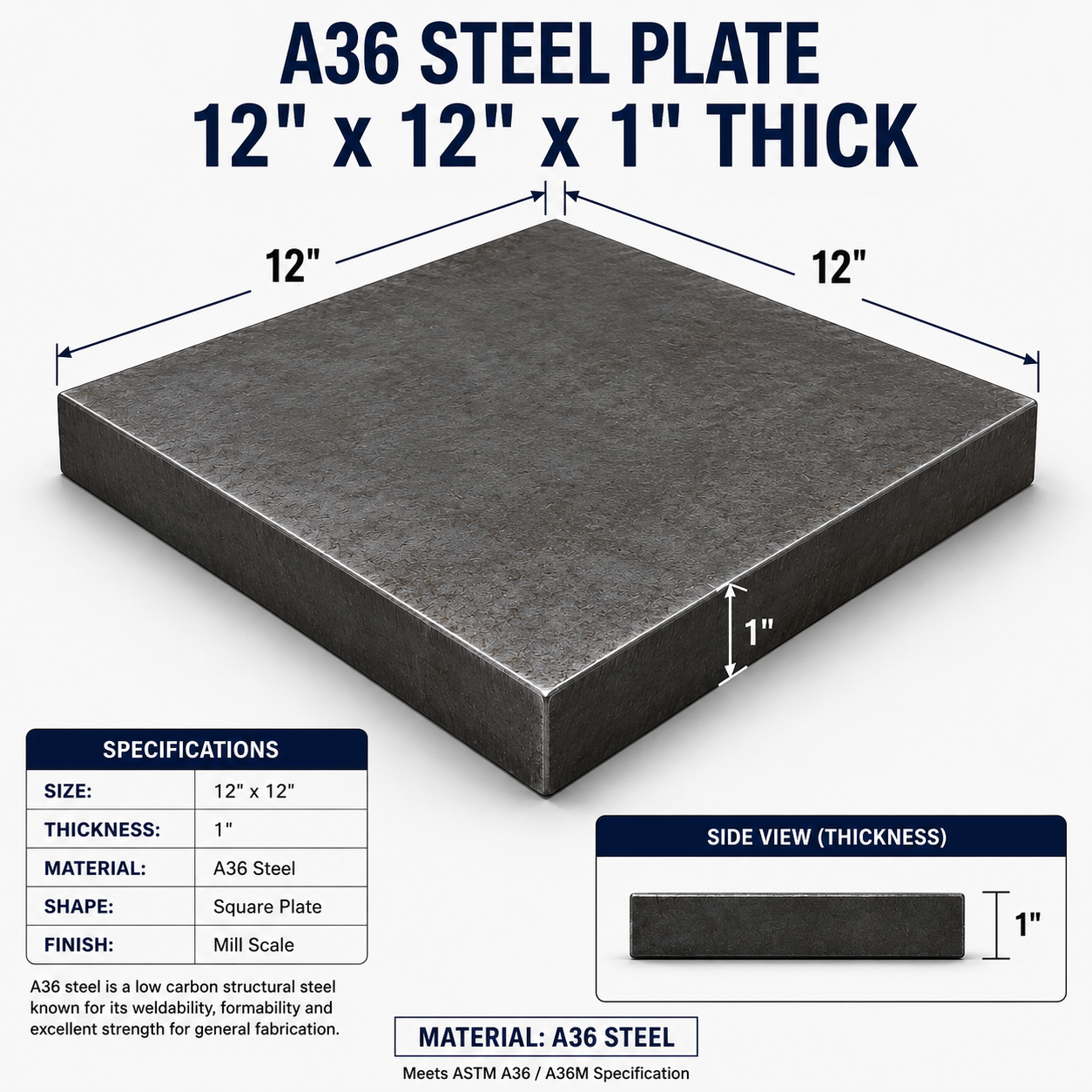
Steel weight starts with a simple calculation.
Steel is heavy, but exactly how heavy? The answer depends on the shape, size, thickness, and length of the material.
The Basics of Steel Weight
Carbon steel has a density of approximately 490 pounds per cubic foot, or about 0.283 pounds per cubic inch.
That means the basic idea behind calculating steel weight is simple:
Volume × Density = Weight
The calculation gets a little more complicated depending on the shape of the steel.
Calculating the Weight of Steel Plate
For plate, you first calculate the volume using its length, width, and thickness.
For example, let's look at a 1/4-inch thick steel plate measuring 4 feet × 8 feet.
Convert the dimensions to inches:
- 4 feet = 48 inches
- 8 feet = 96 inches
- Thickness = 0.25 inches
Then calculate the volume:
48 × 96 × 0.25 = 1,152 cubic inches
Multiply that by the approximate density of steel:
1,152 × 0.283 = 326 pounds
So, a 4' × 8' × 1/4" steel plate weighs approximately 326 pounds.
What About Beams, Angle, Channel, and Tubing?
Structural steel shapes are a little different because calculating their exact volume would require accounting for the dimensions of each part.
Fortunately, you usually don't have to.
Steel products such as beams, channels, angles, pipes, and tubing have established weight per foot based on their size and thickness.
For example, the designation W8 × 35 tells you quite a bit about a wide flange beam. The W identifies it as a wide-flange shape, while the 35 indicates the beam weighs approximately 35 pounds per foot.
A 20-foot-long W8 × 35 would therefore weigh:
35 lb/ft × 20 ft = 700 pounds
The same basic idea can be used for many other steel products once you know their weight per foot.
Why Steel Weight Matters
Knowing the weight of steel is useful for more than curiosity. Weight can affect:
- Material handling and lifting requirements
- Transportation and shipping
- Structural calculations
- Project planning
- Material cost
Steel is also commonly priced by weight, so knowing how much material weighs can help you better understand how steel quantities and pricing are calculated.
You Don't Have to Calculate It Yourself
While the math can be useful to understand, you don't need to pull out a calculator every time you order steel.
Standard steel shapes and sizes have established weights that can be quickly referenced. Steel weight calculators can also make it easy to estimate the weight of plate, tubing, pipe, beams, and other products.
Find Steel Weights in Our Reference Guide
Our Reference Guide is another easy way to find this information. It includes dimensions and per-foot weights for many common steel shapes and sizes, making it easy to look up how much a piece of material weighs without calculating it from scratch.
Once you know the weight per foot, simply multiply it by the material's length to estimate the total weight.