Why are triangles used in steel structures?
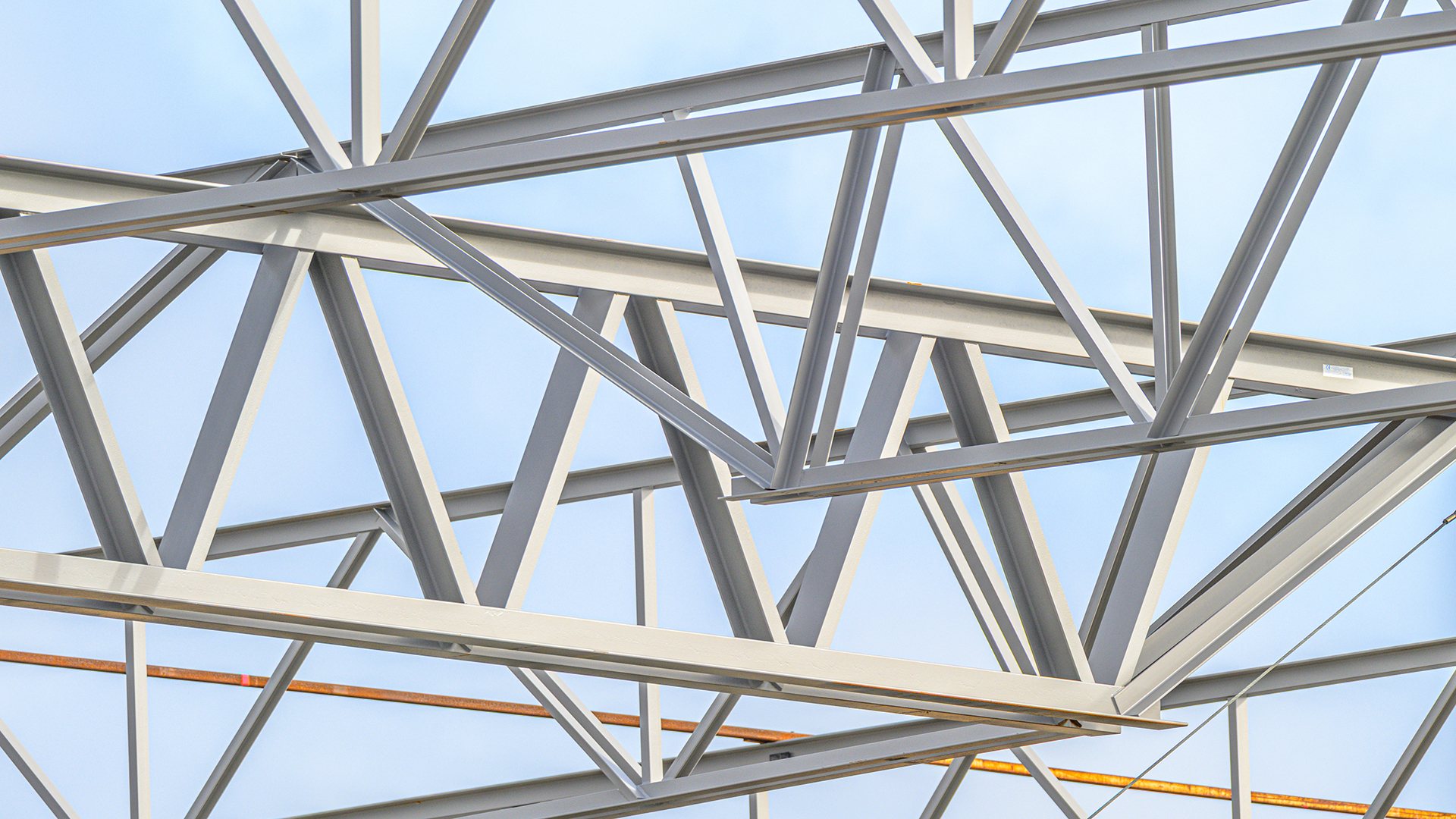
Look closely at a steel structure, and you'll often see triangles.
What Makes Triangles So Strong?
It all comes down to geometry.
Think about a square made from four straight pieces connected at the corners. If those connections can pivot, the square can easily shift into a diamond shape without changing the length of any of its sides.
A triangle works differently.
With three fixed-length sides connected at the corners, a triangle can't change shape without one of those sides changing length.
This makes triangles inherently rigid, which is exactly what engineers want when designing structures that must remain stable under heavy loads.
How Triangles Work in Steel Trusses
One of the most common places you'll see triangles is in steel trusses, like those used in bridges and large buildings.
A truss is a framework of steel pieces connected together, usually in a pattern of triangles. These pieces work together to support weight and keep the structure stable.
When weight is added, some pieces are pulled while others are pushed. The triangular design helps spread that weight throughout the structure.
This allows steel trusses to support heavy loads and span large spaces with less material.
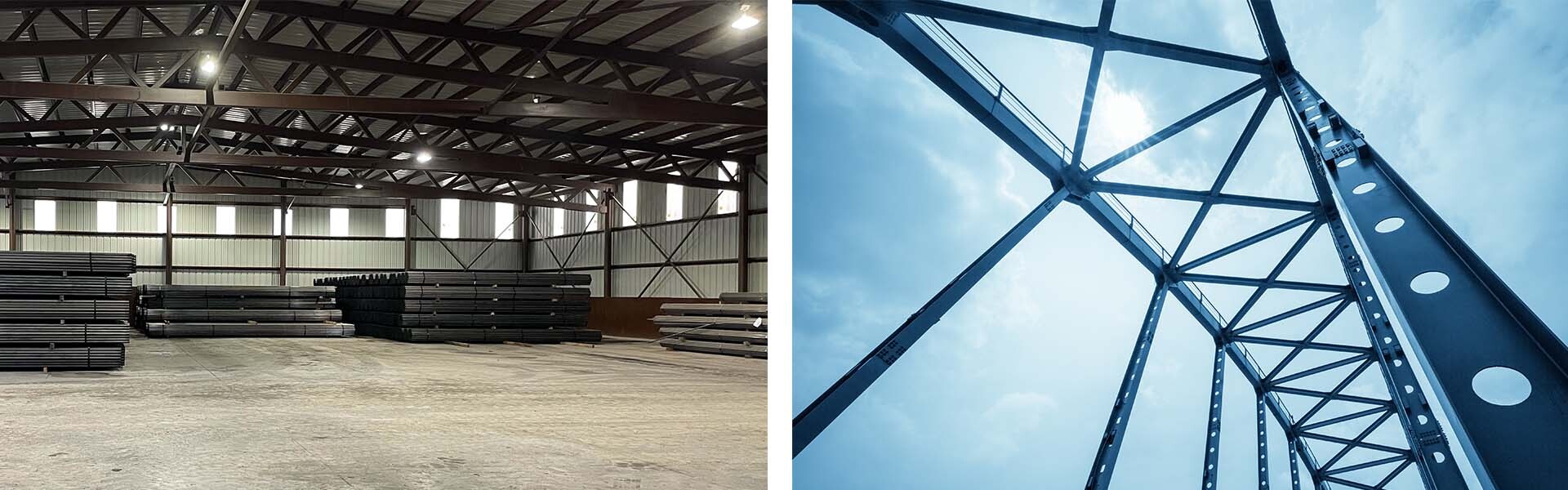
Where Are Steel Trusses Used?
Steel trusses are found in all kinds of construction projects, including:
- Bridges: Trusses help carry loads across long spans while limiting the amount of material needed.
- Warehouses: Roof trusses can span large open areas without requiring rows of interior columns.
- Industrial buildings: Trusses support roofs and other structural loads in manufacturing facilities and large commercial spaces.
- Towers: Triangular bracing helps provide stability in structures exposed to wind and other forces.
Although the applications vary, the basic idea remains the same: use geometry to create a strong, stable framework.
Are Triangles Always Stronger?
Not always. While triangles are great for keeping structures stable, there's more to strength than shape alone.
The type of steel, the size of each piece, and how everything is connected all play a role.
Even a triangular structure can bend or buckle if it isn't designed to handle the weight placed on it.
That's why engineers look at the whole structure, not just its shape, when designing something that's built to last.
Helpful Links
Categories: Resources